English
 EUR €
EUR €
Ships from IrelandTracked, inside the EU
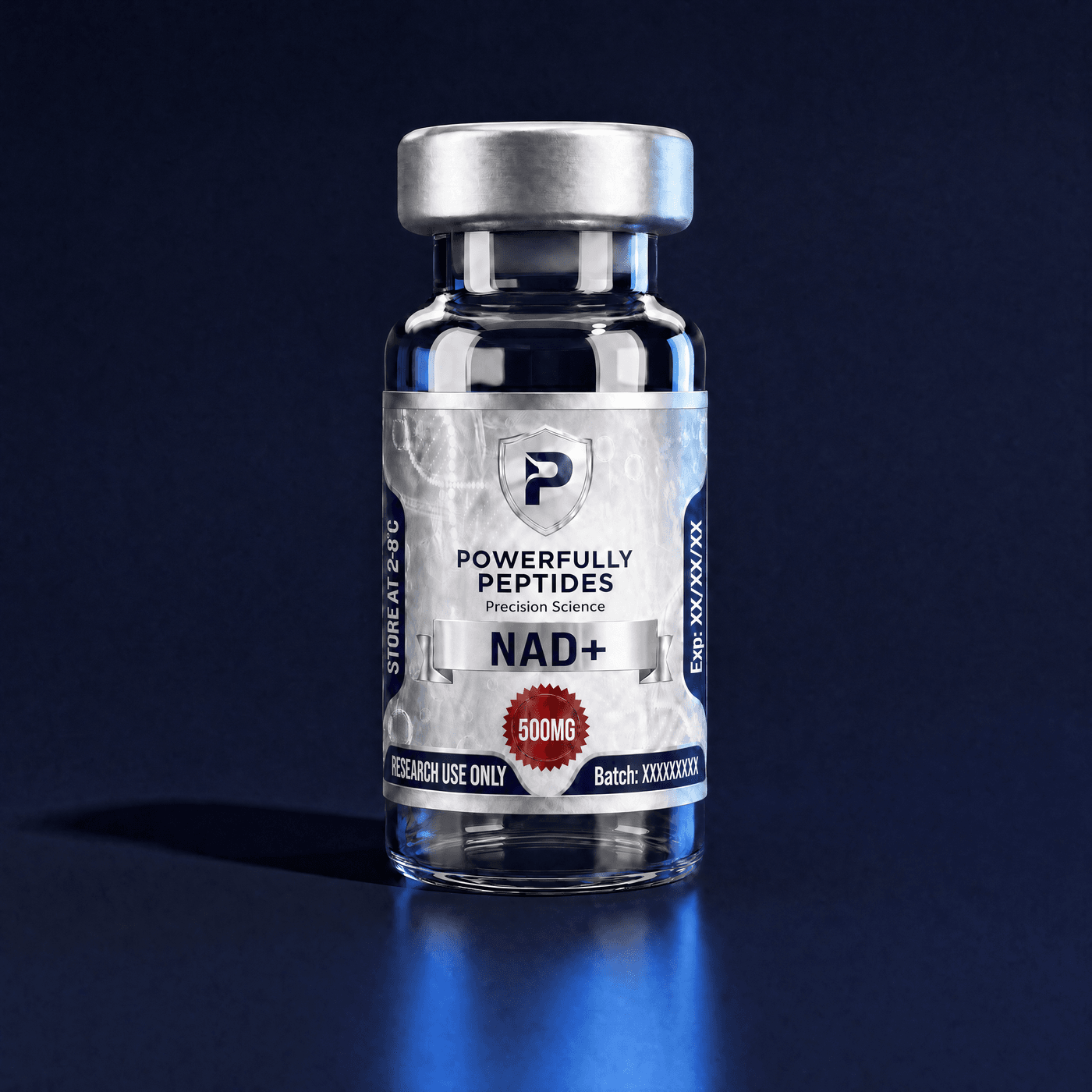
Nicotinamide adenine dinucleotide (NAD⁺) is a universal redox cofactor and enzyme co-substrate central to energy metabolism (NAD⁺/NADH) and cellular signalling. Supplied lyophilised for laboratory research use only.
Nicotinamide adenine dinucleotide (NAD⁺) is a universal redox cofactor and enzyme co-substrate central to energy metabolism (NAD⁺/NADH) and cellular signalling. As a co-substrate it supports sirtuins (SIRT1–7), PARPs and CD38/CD157, which are studied in connection with mitochondrial biogenesis, DNA-repair pathways and circadian regulation.
Cellular NAD⁺ is reported in the literature to decline with age and metabolic stress through increased consumption and reduced salvage. Augmentation approaches studied in research models include precursors such as nicotinamide, NMN and NR.
| Area | Reported research focus |
|---|---|
| Mitochondrial function & ATP | Electron-transport support and ATP turnover in cellular models. |
| Metabolic flexibility | Insulin-sensitivity and substrate-handling pathways under metabolic stress. |
| Cellular & vascular aging | Sirtuin-linked pathways associated with cellular senescence. |
| Specification | Detail |
|---|---|
| Product | NAD+ |
| Format | Lyophilised vial |
| Fill | 500 mg per vial |
| Molecular formula | C21H27N7O14P2 |
| Purity | Specified to a 99%+ purity target — per-batch documentation will be published once independent lab testing completes |
| Price | €70.00 |
| Availability | In stock — dispatched from Ireland within 1–2 working days, tracked |
| Supplied for | Laboratory research use only — not for human consumption, diagnostic or therapeutic use |
Every production batch is sent for independent, third-party analysis at Janoshik Analytical. When results return, the full Certificate of Analysis for the exact batch you receive is published here and in our COA library, carrying its SHA-256 checksum and the lot number printed on your vial, so you can confirm the document is genuine and untampered. We publish every certificate, including any that fail.
Occasional, useful email: new-batch and restock notices, the free reconstitution calculator and guides, plus FIRST10 for 10% off your first order. No daily blasts.