 English
 EUR €
EUR €
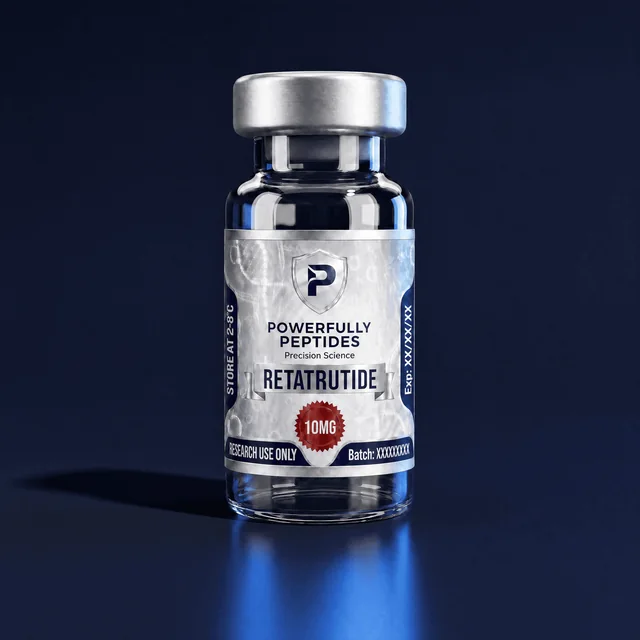
In stock
Retatrutide
€110
Two-peptide co-lyophilised vial: BPC-157 with TB-500
Wolverine Blend kombiniert zwei der am intensivsten untersuchten Peptide der Regenerationsforschung — BPC-157 und TB-500 (ein Thymosin-β4-Fragment) — in einer einzigen lyophilisierten Durchstechflasche. Forschende greifen zur Kombination, wenn ein Studiendesign sowohl den mit BPC-157 assoziierten Angiogenese- und Bindegewebs-Signalweg als auch den mit TB-500 assoziierten Aktin- und Zellmigrations-Signalweg abbilden soll.
Diese Seite richtet sich an europäische Forschungseinkäufer, die den Blend für In-vitro-Arbeiten beziehen. Lieferung ausschließlich für die Laborforschung — nicht für den menschlichen oder tierärztlichen Gebrauch — mit Reinheitsziel ≥99 %, chargenverfolgt und verfolgt aus Europa versandt. Unabhängige chargenbezogene Analysenzertifikate sind unser veröffentlichter Prüfstandard.
Sie suchen etwas anderes? Alle Forschungspeptide ansehen → · Rekonstitutions-Rechner
Wolverine Blend is a single lyophilised vial holding two distinct synthetic peptides, BPC-157 and TB-500, at a combined 10 mg fill. The two are co-lyophilised from solution as a physical mixture: nothing is conjugated, cross-linked or fused into a single molecule. Because the product is a mixture rather than a compound, no single CAS registry number, molecular formula or molecular weight describes it; those identifiers exist only at the constituent level and are given below. The ratio between the two peptides is a property of the lot and is stated on the certificate of analysis, not here.
All presented information is based on scientific publications which can be found at the end of product description below.
The product is intended for scientific research and development purposes only. Chemical substances shall not be used as a drug, medicine, active substance, medical aid, cosmetic product, a substance for production of a cosmetic product neither for human consumption that is any food or food supplement or otherwise similarly used on humans or animals. Intended only for in-vitro research, such as Receptor-ligand binding studies, Enzyme activity assays, Cell proliferation assays, Cell signaling assays, Epitope mapping, ect.
Peptides in lyophilized form are supplied in glass vials by standard shipping methods and do not require refrigeration. Short-term temperature fluctuations during transport will not reduce their quality and efficacy. Even at high summer temperatures, the peptides in lyophilized form are stable for several weeks.
Upon receiving the lyophilized peptide, store at 4 °C or colder and away from bright light. Lyophilized peptides are stable at room temperature for weeks, but for longer-term storage, it is safer to store at -20 °C or colder. Exposure to moisture will greatly decrease long-term stability of lyophilized peptides. Before using the peptide, remove from cold storage and allow the peptide to equilibrate to room temperature before removing the lid of the container, in order to reduce the uptake of moisture that is present in the surrounding atmosphere.
The shelf life of peptide solutions is limited. Freezing the aliquots will prolong the storage life of the peptide. What is globally accepted for peptides in solution is that they are generally stable for 3 or more weeks at +4°C and for 3-4 months at -20°C. Avoid repeated freeze-thaw cycles, as this can degrade the peptides.
Used solely for in vitro experiments and cannot be:
Neutral reference material and handling tools from across the site. Research use only.
Compounds examined in tissue-repair and recovery models.
ReferenceWhat the 0.9% benzyl alcohol preservative does, the 28-day in-use window, and which vial size fits your work.
ToolWork out the exact bacteriostatic water to add and the volume to draw for a target research concentration.
Wolverine Blend is a single lyophilised vial holding two distinct synthetic peptides, BPC-157 and TB-500, at a combined 10 mg fill. The two are co-lyophilised from solution as a physical mixture: nothing is conjugated, cross-linked or fused into a single molecule. Because the product is a mixture rather than a compound, no single CAS registry number, molecular formula or molecular weight describes it; those identifiers exist only at the constituent level and are given below. The ratio between the two peptides is a property of the lot and is stated on the certificate of analysis, not here.
BPC-157 is a pentadecapeptide, sequence Gly-Glu-Pro-Pro-Pro-Gly-Lys-Pro-Ala-Asp-Asp-Ala-Gly-Leu-Val (one-letter: GEPPPGKPADDAGLV). The CAS number for the free peptide is 137525-51-0, molecular formula C62H98N16O22, average molecular weight approximately 1419.5 g/mol. Acetate and trifluoroacetate salts of the same peptide carry their own separate registry numbers, so a certificate of analysis may name a salt rather than the free peptide. The sequence corresponds to a partial fragment of a larger protein isolated from human gastric juice and designated Body Protection Compound; the 15-residue peptide itself is not a discrete natural gene product and is prepared by solid-phase synthesis. Four of its fifteen residues are proline, three of them consecutive at positions 3 to 5, which constrains the backbone and is the usual explanation offered in the literature for the peptide's reported stability in acidic media. It carries no cysteine and therefore no disulfide bridge, and no terminal modification.
TB-500 is a trade designation rather than a chemical name, and the labelling is not consistent between suppliers. The parent molecule is thymosin beta-4 (Tbeta4), a 43-amino-acid actin-binding protein, CAS 77591-33-4, molecular formula C212H350N56O78S, molecular weight approximately 4963 g/mol; that formula corresponds to the natively N-acetylated protein, and figures near 4921 g/mol seen elsewhere refer to the non-acetylated form. Esposito and colleagues characterised a commercial TB-500 preparation by NMR and mass spectrometry and identified its active component as the N-terminally acetylated 17-23 fragment of human Tbeta4, Ac-Leu-Lys-Lys-Thr-Glu-Thr-Gln (Ac-LKKTETQ), not the full-length protein (Drug Testing and Analysis, 2012). Other vendors ship full-length Tbeta4 under the same TB-500 name. The two materials differ by roughly 4 kDa, the fragment being about 889 Da against about 4963 Da for the full-length protein. Anyone comparing blends across suppliers should read the lot certificate of analysis, since the product name alone does not settle which molecule is in the vial.
The two constituents have literatures of very different size and character, and they should be read separately. Neither body of work studied this blend.
The BPC-157 record is almost entirely preclinical: rodent models and cell culture, with a large share of the output coming from a single research group in Zagreb. Sikiric and colleagues summarised that programme's gastrointestinal work in a 2011 review in Current Pharmaceutical Design. On the connective-tissue side, Chang et al. cultured rat Achilles tendon explants and tendon fibroblasts with the peptide across a 0 to 2 micrograms per millilitre range; in a transwell filter assay, 2 micrograms per millilitre increased fibroblast migration 2.3-fold, while the MTT assay showed that the peptide did not exert a direct effect on the proliferation of those fibroblasts. The authors attributed the migration result to phosphorylation of FAK and paxillin (Journal of Applied Physiology, 2011). Hsieh et al. reported that BPC 157 time-dependently activated the VEGFR2-Akt-eNOS signalling pathway, working in human umbilical vein endothelial cells and in two animal models, a chick chorioallantoic membrane assay and a rat hind limb ischaemia model (Journal of Molecular Medicine, 2017). No completed, peer-reviewed randomised controlled trial of BPC-157 in humans has been published.
Thymosin beta-4 has the deeper file, including human work. Malinda et al. applied Tbeta4 topically or intraperitoneally in a rat full-thickness dermal wound model and reported reepithelialisation increased by 42% over saline controls at 4 days and by as much as 61% at 7 days (Journal of Investigative Dermatology, 1999). Bock-Marquette et al. reported in Nature that Tbeta4 formed a functional complex with PINCH and integrin-linked kinase, resulting in activation of the survival kinase Akt, and examined cardiac cell migration and survival in murine infarct models (2004). In the clinical column, Sosne et al. ran a phase 2 randomised trial of Tbeta4 eye drops (RGN-259, 0.1%) against vehicle in nine patients with severe dry eye, reporting outcomes for ocular discomfort and corneal staining (Cornea, 2015). The trial is small and ophthalmic; it does not speak to any other tissue.
A distinction worth holding onto: the great majority of that Tbeta4 literature used the full-length 43-residue protein. The acetylated seven-residue fragment sold as TB-500 has been studied far less, and the published work on it sits mainly in analytical chemistry and doping-control journals rather than in biology. Read as evidence for a 7-mer, the Tbeta4 corpus is indirect.
The combination itself has not been studied as a unit. A search of the peer-reviewed literature returns no controlled study, pharmacokinetic characterisation or safety evaluation of BPC-157 and TB-500 co-administered; the pairing appears in vendor and practitioner writing, not in primary research. Any interaction, additive effect or incompatibility between the two is therefore uncharacterised. Both are controlled in sport: BPC-157 was added to the WADA Prohibited List in 2022, the first substance ever included by name as an example under section S0 (non-approved substances), while thymosin beta-4 and its derivatives, TB-500 explicitly among them, are listed under section S2 (peptide hormones, growth factors, related substances and mimetics).
Wolverine Blend ist eine einzelne lyophilisierte Forschungs-Durchstechflasche mit BPC-157 und TB-500 (einem Thymosin-β4-Fragment). Die Lieferung an europäische Forschungseinkäufer erfolgt ausschließlich für Laborzwecke, verfolgt versandt aus Europa.
In der Forschung werden beide häufig gemeinsam untersucht, da sie mit komplementären Signalwegen assoziiert sind — Angiogenese und Bindegewebsreparatur (BPC-157) sowie Aktin-Regulation und Zellmigration (TB-500). Der Blend wird ausschließlich für die In-vitro-Forschung geliefert; Aussagen zur Anwendung bei Mensch oder Tier machen wir nicht.
Reinheitsziel ≥99 %, chargenverfolgt. Unabhängige chargenbezogene Analysenzertifikate sind unser veröffentlichter Prüfstandard — siehe unsere COA-Seite.
€110
€129
€35
€50
€50
€70