 English
 EUR €
EUR €
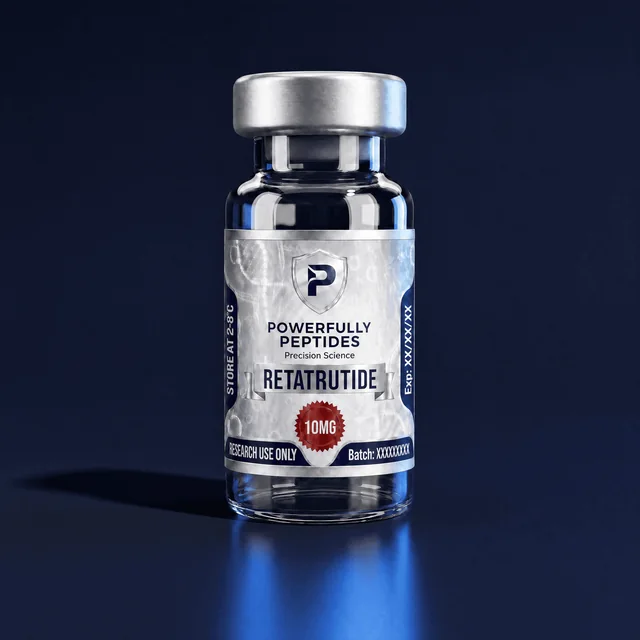
In stock
Retatrutide
€110
Thymosin β4 peptide, lyophilised powder
TB-500 è un frammento sintetico che corrisponde alla regione attiva della timosina β4, un peptide naturale che lega l'actina. Nella ricerca viene studiato in relazione alla regolazione dell'actina e alla migrazione cellulare, motivo per cui compare spesso nei modelli in vitro di riparazione tissutale e guarigione delle ferite.
Questa pagina è rivolta agli acquirenti per la ricerca europei che si riforniscono di TB-500 per lavori di laboratorio. Viene fornito un flaconcino da 10 mg esclusivamente per scopi di ricerca, non per l'uso umano o veterinario, con purezza target ≥99%, tracciato per lotto e spedito in modalità tracciata dall'Europa. I certificati di analisi indipendenti e specifici per lotto sono il nostro standard di verifica pubblicato.
Cerchi qualcos'altro? Vedi tutti i peptidi di ricerca → · Calcolatore di ricostituzione
The name TB-500 does not resolve to a single molecule, and this page says so rather than picking one. Two chemically distinct materials are sold under it. One is full-length thymosin β4, a 43-residue N-acetylated peptide with a formula of C212H350N56O78S and an average mass near 4963.5 g/mol, registered as CAS 77591-33-4 in its free form and CAS 1346423-89-9 as the acetate salt. The other is the N-acetylated 17-23 fragment, Ac-Leu-Lys-Lys-Thr-Glu-Thr-Gln, CAS 885340-08-9, formula C38H68N10O14, average mass near 889.0 g/mol. The two differ by more than five-fold in mass. The specification table on this page is therefore left blank until the certificate of analysis for the lot on sale has been read, and the identifiers will be published there afterwards.
All presented information is based on scientific publications which can be found at the end of product description below.
The product is intended for scientific research and development purposes only. Chemical substances shall not be used as a drug, medicine, active substance, medical aid, cosmetic product, a substance for production of a cosmetic product neither for human consumption that is any food or food supplement or otherwise similarly used on humans or animals. Intended only for in-vitro research, such as Receptor-ligand binding studies, Enzyme activity assays, Cell proliferation assays, Cell signaling assays, Epitope mapping, ect.
Peptides in lyophilized form are supplied in glass vials by standard shipping methods and do not require refrigeration. Short-term temperature fluctuations during transport will not reduce their quality and efficacy. Even at high summer temperatures, the peptides in lyophilized form are stable for several weeks.
Upon receiving the lyophilized peptide, store at 4 °C or colder and away from bright light. Lyophilized peptides are stable at room temperature for weeks, but for longer-term storage, it is safer to store at -20 °C or colder. Exposure to moisture will greatly decrease long-term stability of lyophilized peptides. Before using the peptide, remove from cold storage and allow the peptide to equilibrate to room temperature before removing the lid of the container, in order to reduce the uptake of moisture that is present in the surrounding atmosphere.
The shelf life of peptide solutions is limited. Freezing the aliquots will prolong the storage life of the peptide. What is globally accepted for peptides in solution is that they are generally stable for 3 or more weeks at +4°C and for 3-4 months at -20°C. Avoid repeated freeze-thaw cycles, as this can degrade the peptides.
Used solely for in vitro experiments and cannot be:
Neutral reference material and handling tools from across the site. Research use only.
Compounds examined in tissue-repair and recovery models.
ReferenceWhat the 0.9% benzyl alcohol preservative does, the 28-day in-use window, and which vial size fits your work.
ToolWork out the exact bacteriostatic water to add and the volume to draw for a target research concentration.
The name TB-500 does not resolve to a single molecule, and this page says so rather than picking one. Two chemically distinct materials are sold under it. One is full-length thymosin β4, a 43-residue N-acetylated peptide with a formula of C212H350N56O78S and an average mass near 4963.5 g/mol, registered as CAS 77591-33-4 in its free form and CAS 1346423-89-9 as the acetate salt. The other is the N-acetylated 17-23 fragment, Ac-Leu-Lys-Lys-Thr-Glu-Thr-Gln, CAS 885340-08-9, formula C38H68N10O14, average mass near 889.0 g/mol. The two differ by more than five-fold in mass. The specification table on this page is therefore left blank until the certificate of analysis for the lot on sale has been read, and the identifiers will be published there afterwards.
The independent evidence on the name leans toward the fragment. The Global Substance Registration System operated by the United States FDA and NCATS registers TB-500 as a substance in its own right, UNII QHK6Z47GTG, CAS 885340-08-9, with the subunit sequence LKKTETQ, and files the 43-residue peptide under separate records: timbetasin, the international nonproprietary name for the synthetic peptide, UNII 2D5MRE3SSY, CAS 77591-33-4; timbetasin acetate, UNII 945CRJ0XZ0, CAS 1346423-89-9; and native human thymosin β4 carrying its phosphorylation and lysine acetylation, UNII 549LM7U24W, CAS 77642-24-1. Esposito and colleagues analysed a commercial TB-500 formulation by high-performance liquid chromatography coupled to high-resolution Orbitrap mass spectrometry and identified the heptapeptide Ac-LKKTETQ in it (Drug Testing and Analysis, 2012). Some suppliers nonetheless ship the full-length peptide under the same name, which is why identity here is a matter for the certificate of analysis rather than for the product title.
The parent molecule is well characterised. Thymosin β4 is encoded in humans by the TMSB4X gene, UniProt P62328. The translated 44-residue product loses its initiator methionine and the exposed serine at position 2 is acetylated, giving the mature N-terminal sequence Ac-Ser-Asp-Lys-Pro across 43 residues. Safer, Elzinga and Nachmias describe it as an acidic, heat-stable 5 kDa peptide (Journal of Biological Chemistry, 1991), and Philp and colleagues describe it as the most abundant member of the β-thymosin family in mammalian tissue (FASEB Journal, 2003). The chain contains a single methionine, which accounts for the sole sulfur atom in its molecular formula, and no cysteine, so it carries no disulfide bridges. Residues 17 to 23 of the mature chain are LKKTETQ, the actin-binding motif, and that stretch is the fragment from which the smaller material is taken. Material of this type is prepared by solid-phase peptide synthesis or by recombinant expression, then purified by reversed-phase chromatography and lyophilised. Supplied lyophilised for laboratory research use only. Not for human or veterinary consumption.
The biochemical starting point is actin binding. Safer, Elzinga and Nachmias reported that at least 50 percent of the actin in resting human platelets is unpolymerised and that the bulk of it is complexed with a heat-stable, acidic 5 kDa peptide, which they sequenced and found indistinguishable from thymosin β4. In their assays the purified peptide bound stoichiometrically to muscle G-actin, forming a complex identifiable by nondenaturing polyacrylamide gel electrophoresis, and formation of that complex inhibited salt-induced polymerisation of G-actin (Journal of Biological Chemistry, 1991;266(7):4029-4032). This is the property from which the term actin-sequestering derives. Every study summarised below used the full-length 43-residue peptide unless stated otherwise.
Philp and colleagues is the study that links the full-length peptide to the heptapeptide sold under the same TB-500 name. Using naturally occurring thymosin β4, proteolytic fragments and synthetic peptides, they reported that the full-length peptide and the seven amino acid actin-binding motif displayed near-identical activity at approximately 50 nM in human umbilical vein endothelial cell migration assays and in chick aortic arch vessel-sprouting assays, while peptides lacking any portion of the motif were inactive. Adhesion to thymosin β4 was blocked by the seven amino acid peptide, and the adhesion and sprouting activity was inhibited by the addition of 5 to 50 nM soluble actin (FASEB Journal, 2003;17(14):2103-2105).
In dermal models, Malinda and colleagues used a rat full-thickness wound model and reported that reepithelialisation increased by 42 percent over saline controls at 4 days and by as much as 61 percent at 7 days after wounding, with treated wounds contracting at least 11 percent more than controls by day 7. In the same paper, keratinocyte migration in a Boyden chamber assay was stimulated 2 to 3-fold over medium alone after 4 to 5 hours, with as little as 10 pg of peptide added to the assay (Journal of Investigative Dermatology, 1999;113(3):364-368).
A separate strand of work concerns cardiac tissue. Bock-Marquette and colleagues reported that the peptide promoted myocardial and endothelial cell migration in the embryonic heart and retained that property in postnatal cardiomyocytes, and that it formed a functional complex with PINCH and integrin-linked kinase resulting in activation of Akt. Following coronary artery ligation in mice, the authors reported upregulation of integrin-linked kinase and Akt activity in the heart, enhanced early myocyte survival and improved cardiac function (Nature, 2004;432(7016):466-472).
Human data exist but are narrow and pharmaceutical in origin. Ruff and colleagues ran four cohorts of ten healthy subjects each, giving a single intravenous dose of placebo or synthetic thymosin β4 at ascending doses of 42, 140, 420 or 1260 mg, then the same regimen daily for 14 days. They reported that adverse events were infrequent and mild or moderate in intensity, with no dose-limiting toxicities and no serious adverse events, and a dose-proportional single-dose pharmacokinetic profile with half-life increasing as dose increased (Annals of the New York Academy of Sciences, 2010;1194:223-229). Sosne and Ousler randomised 72 subjects 1:1 to a 0.1 percent thymosin β4 ophthalmic solution or placebo for 28 days in a Phase II dry-eye study; neither primary endpoint, ocular discomfort or inferior corneal staining, differed significantly between groups at visit 5, while discomfort scores during the day 28 controlled adverse environment challenge were 27 percent lower in the treated group than in placebo (P=0.0244), with differences in central and superior corneal staining reported at P=0.0075 and P=0.0210 (Clinical Ophthalmology, 2015;9:877-884). Both trials used pharmaceutical-grade full-length peptide by intravenous or topical ocular routes in defined indications, at doses and by routes that have nothing in common with laboratory handling of this reagent. A search of ClinicalTrials.gov on 26 July 2026 across the terms thymosin beta 4, TB-500, RGN-259 and timbetasin returned registered human studies of the full-length peptide only, in cardiac, ophthalmic and chronic-ulcer indications; it returned no completed study of the Ac-LKKTETQ fragment and no study of either material with athletic or musculoskeletal endpoints. The formulation is discussed in the anti-doping literature chiefly as an analytical detection problem (Esposito et al., Drug Testing and Analysis, 2012;4(9):733-738).
PowerfullyPeptides fornisce TB-500 (frammento della timosina β4) come liofilizzato da 10 mg agli acquirenti per la ricerca in tutta Europa, spedito in modalità tracciata dall'Europa. Vendita esclusivamente per scopi di ricerca di laboratorio.
In laboratorio il TB-500, come frammento della timosina β4, viene studiato in relazione al sequestro dell'actina e alla migrazione cellulare, variabili frequenti nei modelli in vitro di riparazione tissutale e angiogenesi. La fornitura è esclusivamente per scopi di ricerca; non rilasciamo dichiarazioni sull'uso nell'uomo o negli animali.
Purezza target ≥99%, tracciato per lotto. I certificati di analisi indipendenti e specifici per lotto sono il nostro standard di verifica pubblicato: vedi la nostra pagina COA.
€110
€129
€35
€50
€50
€70