 English
 EUR €
EUR €
In stock
Ipamorelin
€48.95
Ipamorelin · Pentapeptide
Ipamorelin is a synthetic pentapeptide with the sequence Aib-His-D-2-Nal-D-Phe-Lys-NH2. It does not occur in nature. The molecule originated in a Novo Nordisk peptide programme under the development code NNC 26-0161 and was characterised by Raun and colleagues in 1998. They identified it within a series lacking the central Ala-Trp dipeptide of growth-hormone-releasing peptide-1.
Supplied for laboratory research only. Not for human or veterinary use, consumption or self-administration.
Inspect the vial and seal on arrival. Contact us about damage or an unexpected condition. Transport alone does not establish chemical stability or suitability for an experiment.
Follow the instructions supplied with the material and your laboratory’s validated procedure. Keep the vial sealed and protect it from moisture and light. Confirm product-specific temperature and shelf-life information before use.
Solvent, pH, concentration and storage conditions depend on the material and assay. Use a validated laboratory protocol; a general mixing calculator does not establish compatibility, sterility or solution shelf life.
No independent report is currently linked to this new strength.
Published papers are not certificates for this vial. Ask for the applicable analytical documentation; reports for another product or strength do not verify this listing.
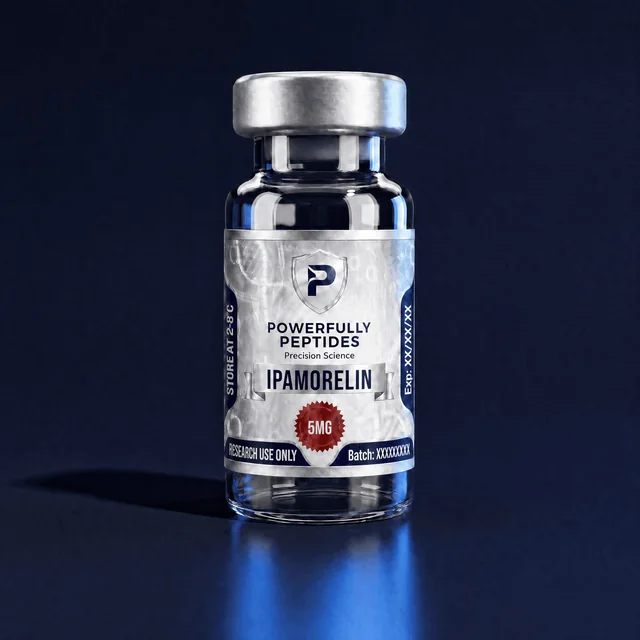
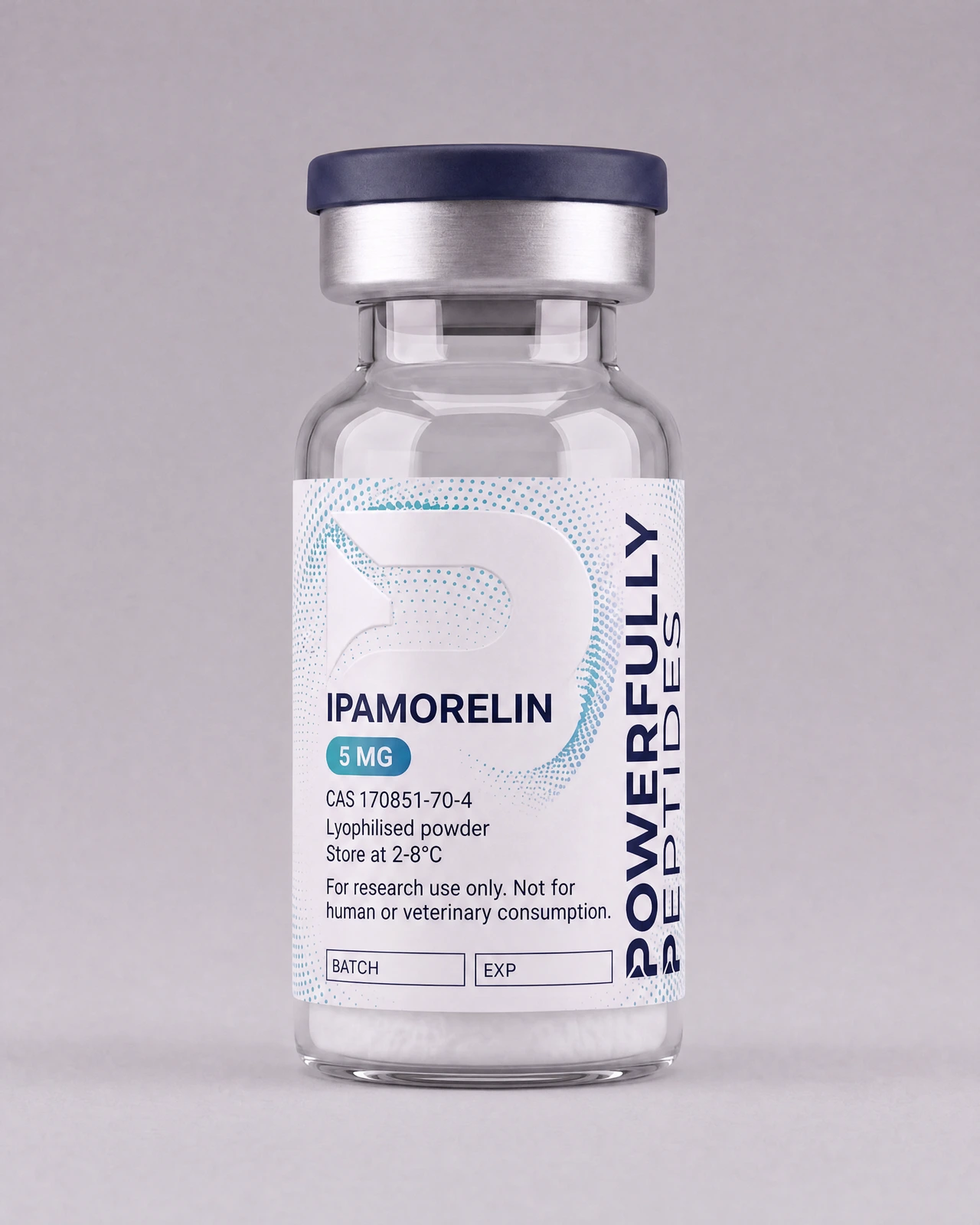
1 vial · 5 mg · Lyophilised powder. The stated milligrams describe total vial content, not a dose or the concentration of a prepared solution.
No independent report is currently linked to this new strength. Published papers are not certificates for this vial. Ask for the applicable analytical documentation; reports for another product or strength do not verify this listing.
Yes. Select the quantity, add this vial to your cart or choose Buy now. Other vial strengths are listed separately.
The cited studies describe particular experimental materials and conditions. They do not test this supplied vial or establish its suitability for human or veterinary use.
Reference material and handling tools. Research use only.
Published papers are not certificates for this vial. Ask for the applicable analytical documentation; reports for another product or strength do not verify this listing.
DocumentationNo independent report is currently linked to this new strength.
Peptide calculatorSupplied for laboratory research only. Not for human or veterinary use, consumption or self-administration.
Ipamorelin is a synthetic pentapeptide with the sequence Aib-His-D-2-Nal-D-Phe-Lys-NH2. It does not occur in nature. The molecule originated in a Novo Nordisk peptide programme under the development code NNC 26-0161 and was characterised by Raun and colleagues in 1998. They identified it within a series lacking the central Ala-Trp dipeptide of growth-hormone-releasing peptide-1.
Four features define its chemistry. The N-terminal residue is Aib, an achiral non-standard amino acid. Positions three and four are D-amino acids: D-2-naphthylalanine and D-phenylalanine. The C-terminus is a carboxamide rather than a free acid. The standard residues are L-histidine and L-lysine. This structure differs from both the longer GHRH peptides and ghrelin, which carries a lipid modification. Ipamorelin has no cysteine and no disulfide bridge.
The free-peptide formula is C38H49N9O5 and its molecular mass is approximately 711.87 g/mol. Counter-ions and bound water can contribute additional mass in a dried preparation, so gross powder mass and net peptide mass are not automatically identical. These chemical distinctions do not establish the salt form, purity or net content of this 5 mg listing; those require the applicable analytical specification.
Raun and colleagues studied hormone release in rat pituitary cells, rats and pigs. Their comparisons with other secretagogues described receptor-related activity and hormone selectivity under those conditions, not a general human safety guarantee. Later rodent studies examined bone growth and mineral content. In the Svensson study, the increase in mineral content disappeared after adjustment for body-weight change, while volumetric bone mineral density was unchanged.
Gobburu and colleagues investigated pharmacokinetics and growth-hormone responses in healthy male volunteers. A different clinical programme concerned postoperative bowel function. In Beck and colleagues’ randomised proof-of-concept study, the median time to the first tolerated meal was 25.3 hours with ipamorelin and 32.6 hours with placebo, but the difference was not statistically significant (p = 0.15). The authors found no significant difference in the key or secondary efficacy analyses. These particular study endpoints should not be converted into claims about muscle growth, recovery or this supplied vial.
€48.95
€3.94