 English
 EUR €
EUR €
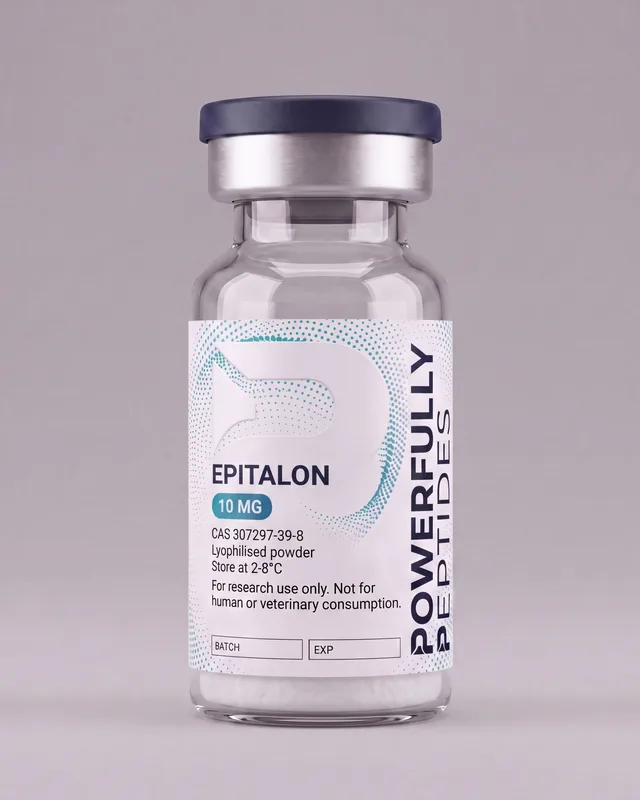
In stock
Epitalon
€28.95
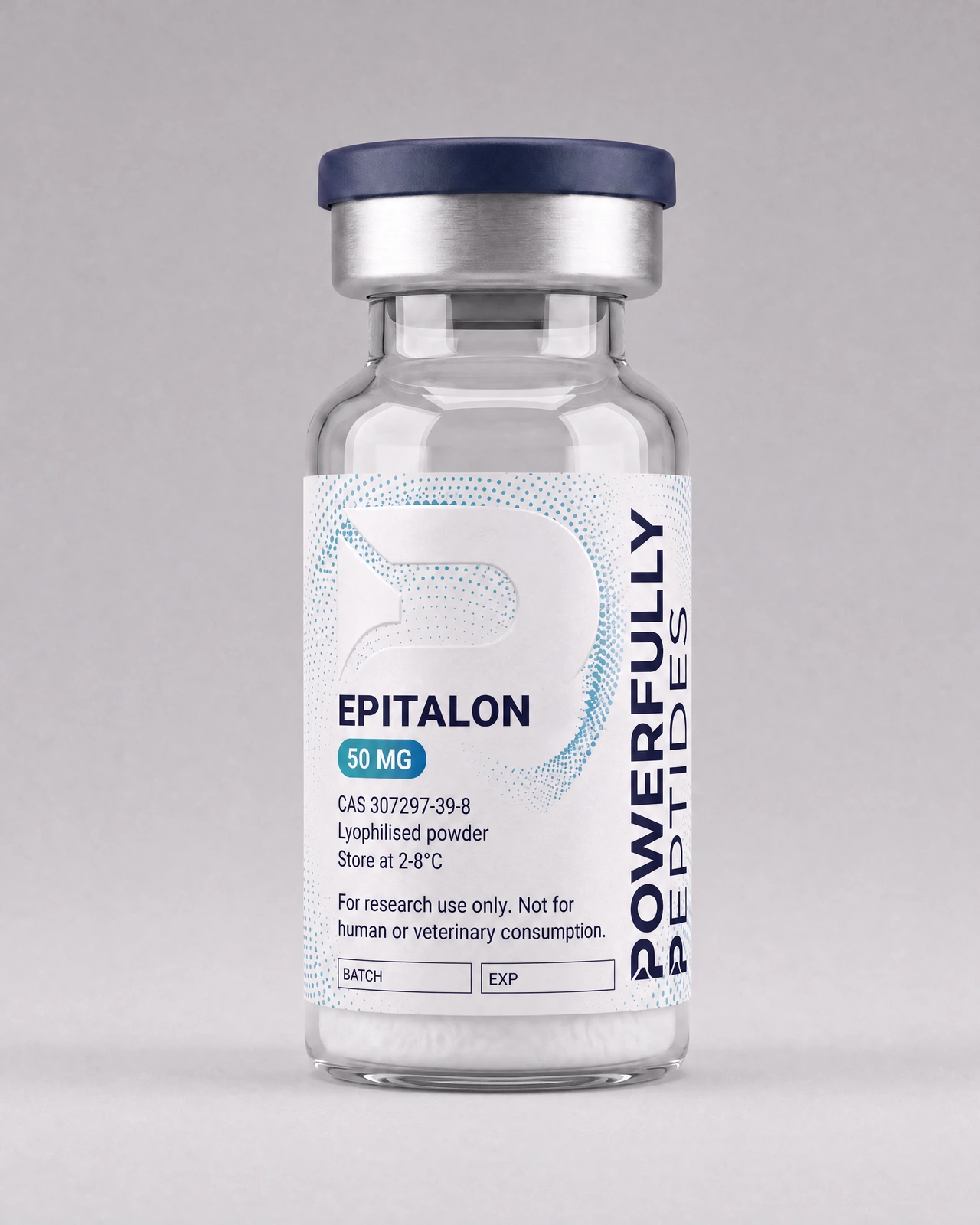
Epitalon (Epithalon) · Tetrapeptide
Epitalon is a synthetic tetrapeptide with the sequence Ala-Glu-Asp-Gly, commonly abbreviated AEDG. The free-peptide molecular formula is C14H22N4O9 and its average molecular mass is 390.35 g/mol. It has a free N-terminal alanine amine and three free carboxyl groups: the glutamate side chain, the aspartate side chain and the C-terminal glycine. It has no disulfide bridge, cyclisation, lipid conjugation or PEG conjugation.
Supplied for laboratory research only. Not for human or veterinary use, consumption or self-administration.
Inspect the vial and seal on arrival. Contact us about damage or an unexpected condition. Transport alone does not establish chemical stability or suitability for an experiment.
Follow the instructions supplied with the material and your laboratory’s validated procedure. Keep the vial sealed and protect it from moisture and light. Confirm product-specific temperature and shelf-life information before use.
Solvent, pH, concentration and storage conditions depend on the material and assay. Use a validated laboratory protocol; a general mixing calculator does not establish compatibility, sterility or solution shelf life.
No independent report is currently linked to this new strength.
Published papers are not certificates for this vial. Ask for the applicable analytical documentation; reports for another product or strength do not verify this listing.
1 vial · 50 mg · Lyophilised powder. The stated milligrams describe total vial content, not a dose or the concentration of a prepared solution.
No independent report is currently linked to this new strength. Published papers are not certificates for this vial. Ask for the applicable analytical documentation; reports for another product or strength do not verify this listing.
Yes. Select the quantity, add this vial to your cart or choose Buy now. Other vial strengths are listed separately.
The cited studies describe particular experimental materials and conditions. They do not test this supplied vial or establish its suitability for human or veterinary use.
Reference material and handling tools. Research use only.
Published papers are not certificates for this vial. Ask for the applicable analytical documentation; reports for another product or strength do not verify this listing.
DocumentationNo independent report is currently linked to this new strength.
Peptide calculatorSupplied for laboratory research only. Not for human or veterinary use, consumption or self-administration.
Epitalon is a synthetic tetrapeptide with the sequence Ala-Glu-Asp-Gly, commonly abbreviated AEDG. The free-peptide molecular formula is C14H22N4O9 and its average molecular mass is 390.35 g/mol. It has a free N-terminal alanine amine and three free carboxyl groups: the glutamate side chain, the aspartate side chain and the C-terminal glycine. It has no disulfide bridge, cyclisation, lipid conjugation or PEG conjugation.
The peptide was designed from the amino-acid composition of Epithalamin, a peptide preparation extracted from bovine pineal gland. Epitalon is therefore a defined four-residue peptide; Epithalamin is a tissue-extract preparation. The two materials are not interchangeable. Older work on the extract should not be presented as a study of the synthetic AEDG molecule.
Registry entries for the synthetic tetrapeptide must be distinguished from database entries also associated with the extract. A name or registry number should therefore be matched to an actual structural and analytical specification. The molecular formula and sequence given here describe the literature molecule; they are not a measurement of the supplied 50 mg vial or a claim about its counter-ion.
The references below cover several different experimental settings: human somatic-cell cultures, mouse studies and other laboratory models. They must be read according to the material and endpoint actually studied. The defined AEDG peptide, a tissue extract and a supplied catalogue vial are three separate evidential questions. This 50 mg listing does not turn cell-culture or animal findings into evidence of human longevity or an anti-ageing treatment.
Al-Dulaimi and colleagues (2025) studied normal and cancer cell lines. They reported telomerase-related telomere changes in normal cells and alternative lengthening of telomeres (ALT) in cancer cells. These are cell-model findings, not evidence of a longer human lifespan or a clinical effect of this vial.
€28.95
€3.94