 English
 EUR €
EUR €
In stock
MOTS-c
€29.95
MOTS-c · 16-amino-acid peptide
MOTS-c stands for mitochondrial open reading frame of the 12S rRNA type-c. It is a 16-amino-acid peptide with the sequence MRWQEMGYIFYPRKLR. Its coding sequence sits inside MT-RNR1, the mitochondrial gene for 12S ribosomal RNA, rather than in the nuclear genome. It belongs to the mitochondrial-derived peptide group, which also includes humanin and the SHLP series. Lee and colleagues characterised it in Cell Metabolism in 2015.
Supplied for laboratory research only. Not for human or veterinary use, consumption or self-administration.
Inspect the vial and seal on arrival. Contact us about damage or an unexpected condition. Transport alone does not establish chemical stability or suitability for an experiment.
Follow the instructions supplied with the material and your laboratory’s validated procedure. Keep the vial sealed and protect it from moisture and light. Confirm product-specific temperature and shelf-life information before use.
Solvent, pH, concentration and storage conditions depend on the material and assay. Use a validated laboratory protocol; a general mixing calculator does not establish compatibility, sterility or solution shelf life.
No independent report is currently linked to this new strength.
Published papers are not certificates for this vial. Ask for the applicable analytical documentation; reports for another product or strength do not verify this listing.
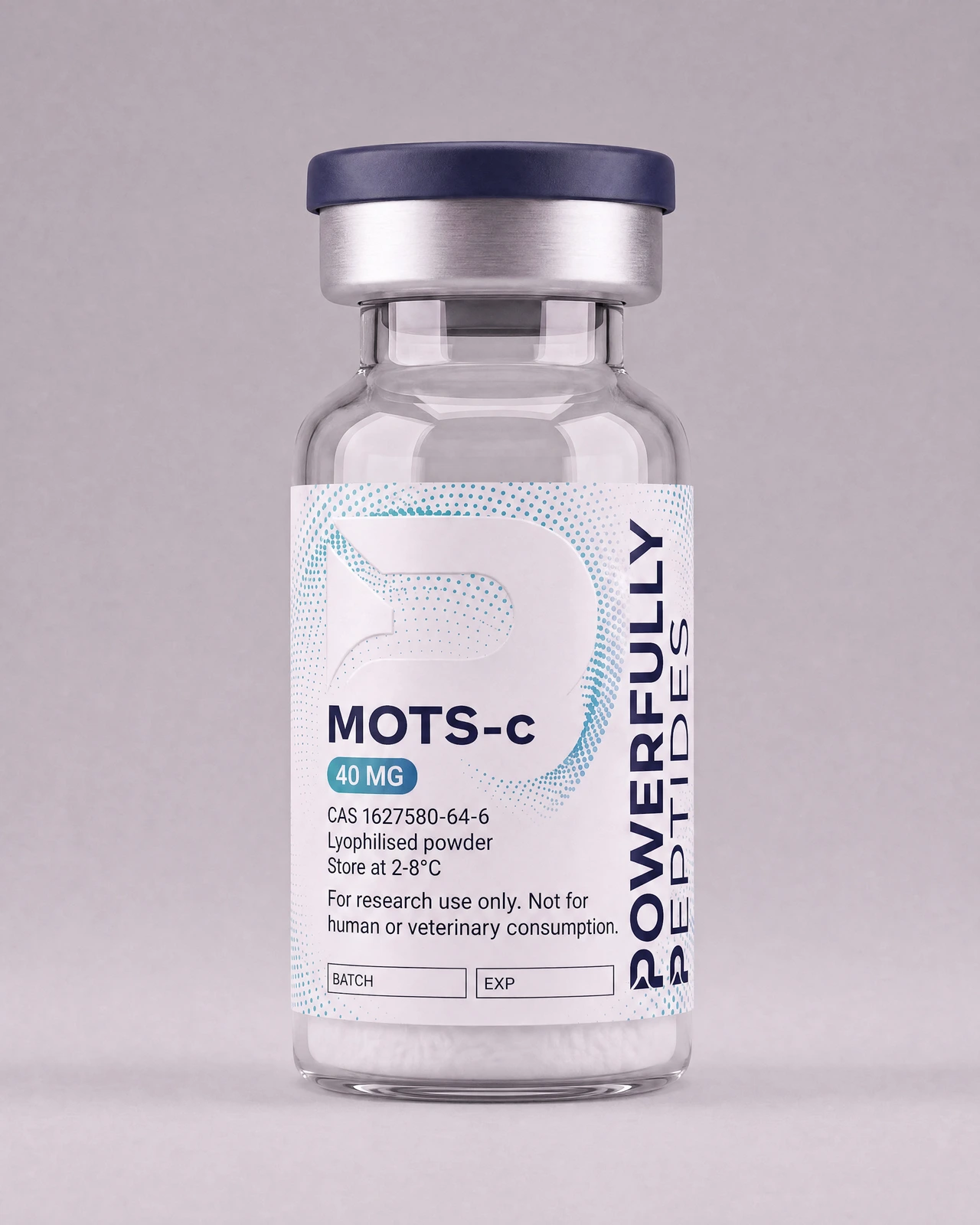
1 vial · 40 mg · Lyophilised powder. The stated milligrams describe total vial content, not a dose or the concentration of a prepared solution.
No independent report is currently linked to this new strength. Published papers are not certificates for this vial. Ask for the applicable analytical documentation; reports for another product or strength do not verify this listing.
Yes. Select the quantity, add this vial to your cart or choose Buy now. Other vial strengths are listed separately.
The cited studies describe particular experimental materials and conditions. They do not test this supplied vial or establish its suitability for human or veterinary use.
Reference material and handling tools. Research use only.
Published papers are not certificates for this vial. Ask for the applicable analytical documentation; reports for another product or strength do not verify this listing.
DocumentationNo independent report is currently linked to this new strength.
Peptide calculatorSupplied for laboratory research only. Not for human or veterinary use, consumption or self-administration.
MOTS-c stands for mitochondrial open reading frame of the 12S rRNA type-c. It is a 16-amino-acid peptide with the sequence MRWQEMGYIFYPRKLR. Its coding sequence sits inside MT-RNR1, the mitochondrial gene for 12S ribosomal RNA, rather than in the nuclear genome. It belongs to the mitochondrial-derived peptide group, which also includes humanin and the SHLP series. Lee and colleagues characterised it in Cell Metabolism in 2015.
The molecular formula of the free peptide is C101H152N28O22S2 and its molecular mass is approximately 2174.62 g/mol. The two sulfur atoms come from methionine residues at positions 1 and 6. The sequence also contains one tryptophan at position 3, two tyrosines, a proline at position 12 and four basic residues: three arginines and one lysine. These are structural descriptors of the named peptide, not a purity result or analysis of this vial.
The free peptide must be distinguished from acetate or trifluoroacetate forms encountered in peptide literature and catalogues. A counter-ion contributes mass beyond the free-peptide value; a different formula mass can therefore reflect a different chemical form rather than a different sequence. The salt form of the supplied 40 mg material remains unverified.
This catalogue entry specifies a 40 mg vial of the named 16-residue peptide. The references below include the original discovery work, studies of nuclear translocation under metabolic stress, muscle and exercise models, and observational or genetic research. These study types answer different questions. The scientific references do not certify the identity, purity or performance of the supplied material, and observations about endogenous MOTS-c are not automatically results for an administered research vial.
€29.95

€3.94